Diagnosing the Fault Before Any Part Is Ordered
Water Heater Repair in Sacramento for units with pilot failures, cold water, or active leaks going unnoticed in garages and closets
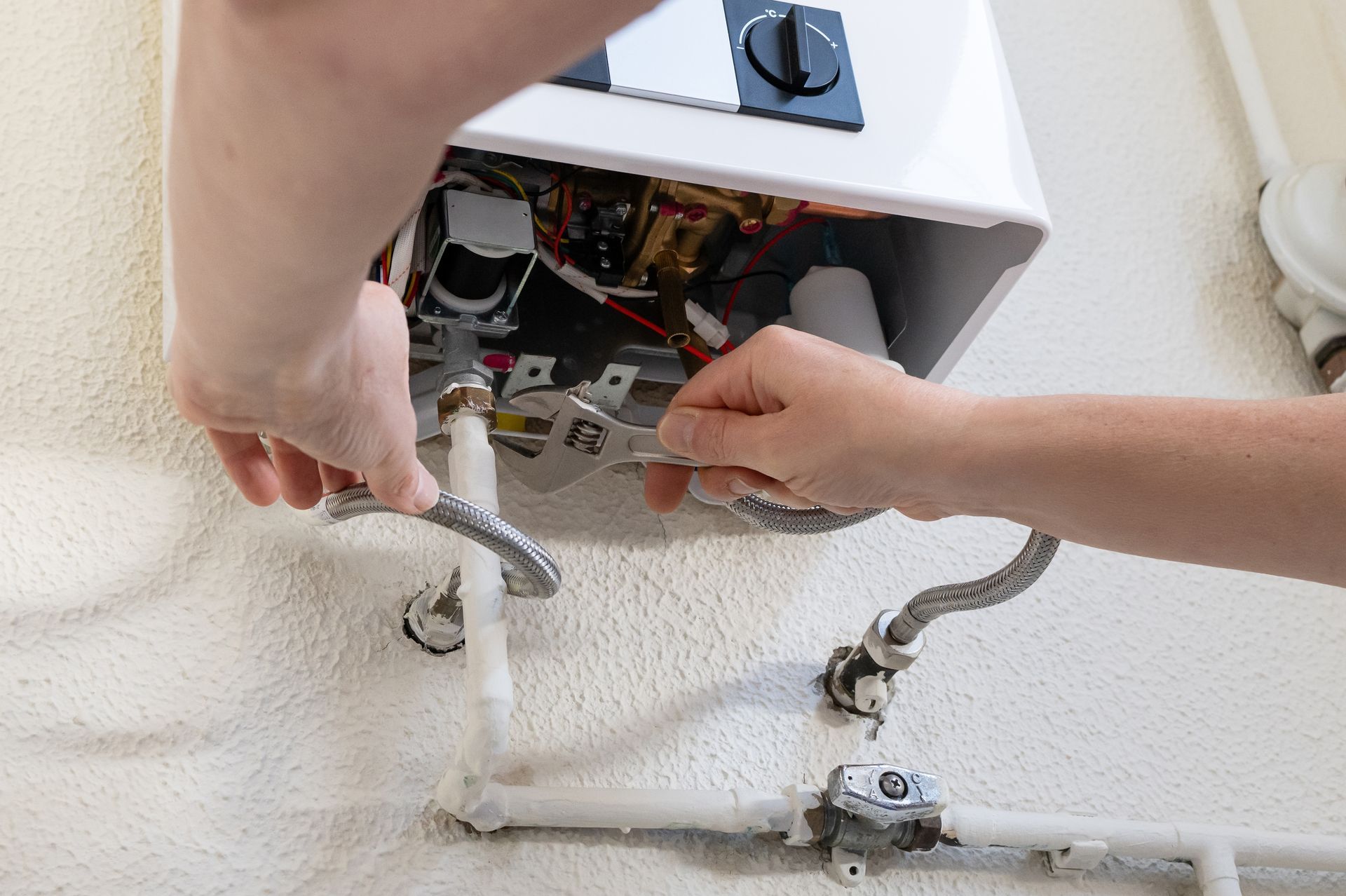
Water heaters tucked into Sacramento garage corners or interior closets — common placements in the post-war single-family construction that defines neighborhoods like Citrus Heights and Carmichael — can develop slow leaks or pilot failures that go undetected for days because nobody looks at them. By the time water appears on the floor or the morning shower runs cold, the fault has usually been present long enough to narrow the diagnosis significantly. Reliable Cooling & Heating sends a two-person team that checks the specific system on arrival: pilot or burner, thermostat or element, gas supply or wiring, and the temperature and pressure relief valve.
The technician works through the diagnostic sequence before any parts are ordered or quoted. Gas supply is confirmed at the valve, then pilot operation is checked, then thermostat calibration is verified against actual water temperature, and the T&P relief valve is tested to confirm it seats cleanly rather than weeping under normal operating pressure. Once the fault is identified, the repair cost is presented along with an honest assessment of whether the repair makes economic sense given the tank's age — a thermocouple replacement on a six-year-old unit is straightforward, but the same repair on a seventeen-year-old tank with visible corrosion at the bottom is a different conversation.
Describe your water heater's symptoms when you call so the technician can arrive with the most likely parts already on hand.
Why the Fault Matters, Not Just the Symptom
A water heater that produces lukewarm water instead of hot water has a different root cause depending on whether it's a gas or electric unit. On a gas unit, low temperature usually points to a thermostat set too low, a partially blocked burner orifice, or a failing thermocouple that's allowing insufficient gas flow to the main burner. On an electric unit, the same symptom points to a failed lower element — because the upper element handles the top of the tank and the lower element handles recovery, a failed lower element means the tank runs short on hot water under any sustained draw. Getting the diagnosis right the first time avoids replacing parts that weren't the cause.
After a repair is completed, the unit is tested under a live draw — water runs until the tank is actively recovering and the technician confirms the temperature is reaching the thermostat set point. You'll notice consistent hot water at the tap rather than the temperature drop mid-shower that signals a unit struggling to keep up. Any evidence of a past leak at connections is also checked and tightened so the repair addresses the full condition, not just the presenting fault.
The T&P relief valve gets specific attention during every repair visit because it's a safety component, not just a maintenance item. A valve that doesn't open under excess pressure or that weeps continuously at normal operating pressure is a separate problem from whatever brought the technician out, and it gets flagged and addressed regardless of whether it was the original complaint.
Common Questions About How Water Heater Repairs Work
The following questions address the repair process itself — what gets checked, how decisions are made, and what you'll observe when the unit is working correctly again.
How does the technician decide whether to repair or recommend replacement?
The repair cost is weighed against the tank's age and condition — a unit with significant sediment buildup, visible corrosion at the base, or multiple failing components in the same visit is a candidate for replacement rather than repair, and that recommendation is explained before any work is authorized.
What does a thermocouple do and why does it fail?
The thermocouple is a safety sensor that confirms the pilot flame is present before allowing gas to flow to the main burner — it degrades over time from repeated heating and cooling cycles, eventually generating too little voltage to hold the gas valve open, which causes the pilot to light but not stay lit.
How is the temperature and pressure relief valve tested during a repair visit?
The technician manually lifts the test lever to confirm the valve opens and releases pressure, then verifies it seats cleanly afterward — a valve that drips after testing is past its service life and should be replaced regardless of what else is being repaired.
Why do Sacramento garage-installed water heaters sometimes develop undetected leaks?
Garage installations are rarely in the line of sight during daily routines, and a small weep at a connection or at the base drain valve can evaporate in a warm space before it pools — the technician checks all connection points and the base of the tank as part of the diagnostic, not just the reported fault.
What should you check after a water heater repair is complete?
Run the hot tap until the tank is actively recovering and confirm the water temperature reaches a consistent level — a correctly repaired unit should not produce a temperature drop mid-draw, and all connection points should be visibly dry within an hour of the repair.
Reliable Cooling & Heating is reachable 24/7 for water heater repairs throughout Sacramento, so a failed unit after hours doesn't mean a cold morning. Reliable Cooling & Heating also repairs water heaters in Roseville, Folsom, Elk Grove, Rancho Cordova and Davis. Call (916) 664-6888 to describe your unit's condition and get a technician dispatched.